Camping in Chincoteague: Best Campgrounds, RV Parks & Glamping
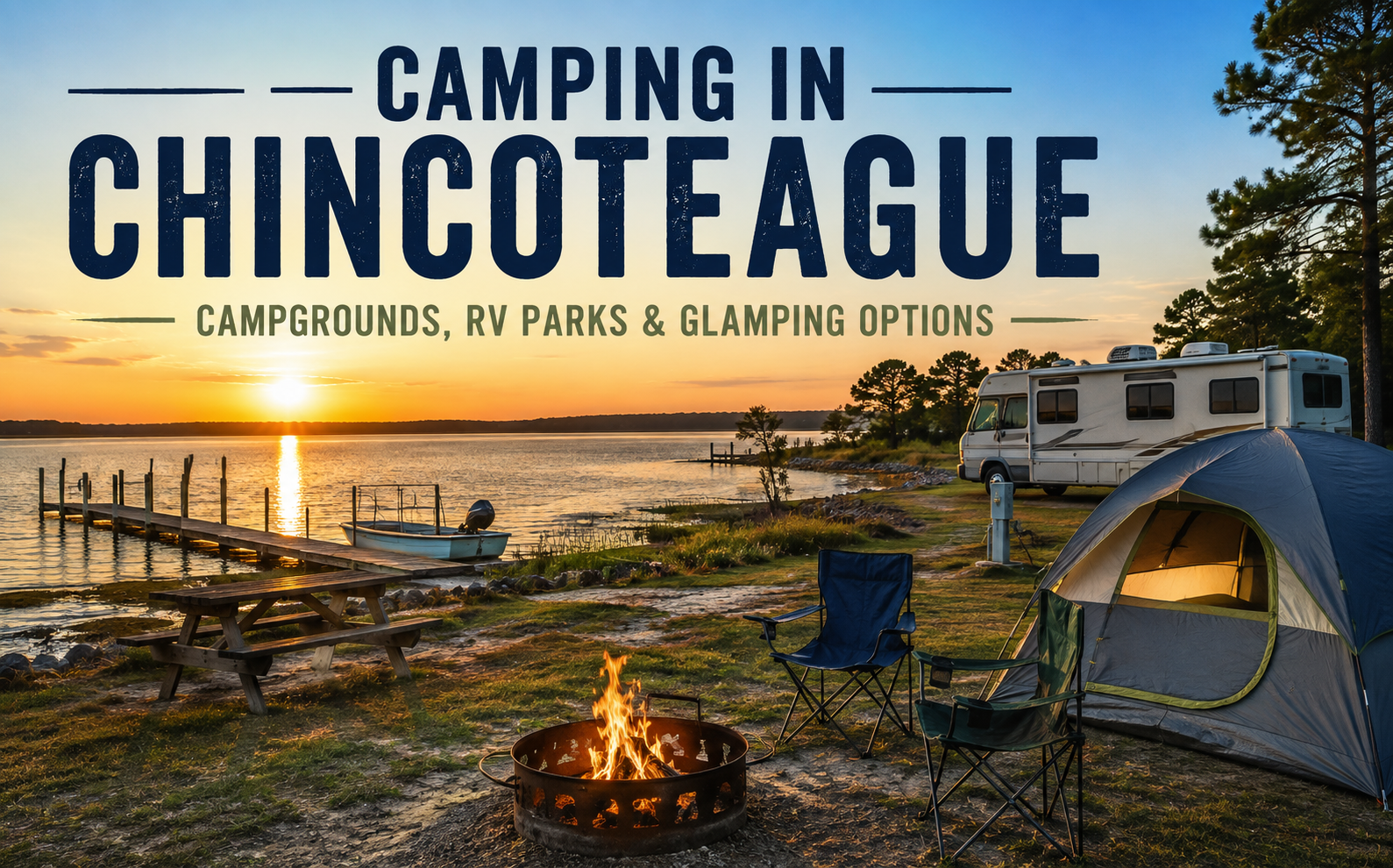
Camping is one of the best ways to experience Chincoteague’s laid-back coastal atmosphere. From waterfront RV sites and traditional tent camping to safari tents, cottages, and family-friendly resorts, there are several ways to stay close to the wild ponies, Assateague Beach, wildlife refuge, and island attractions.
Camping and Chincoteague are a natural combination. Wake up near the water, spend the morning exploring Assateague Island, look for wild ponies and bald eagles during the afternoon, then come back to your campsite for a quiet evening under the stars.
Visitors can choose from traditional campgrounds, waterfront RV sites, family camping resorts, cabins, cottages, and increasingly popular glamping accommodations.
There is one important thing to understand before planning your trip: you cannot camp overnight in the Virginia portion of Assateague Island or inside Chincoteague National Wildlife Refuge. Camping for Chincoteague visitors is located primarily on Chincoteague Island itself or at nearby private campgrounds on Virginia’s Eastern Shore.
Tom’s Cove Park is one of Chincoteague’s longtime camping destinations and offers a classic island camping experience overlooking the waters between Chincoteague and Assateague.
The park is especially popular with RV travelers and people who want to be close to fishing, boating, the wildlife refuge, and Assateague Beach.
Camping options include a variety of RV sites, including highly sought-after waterfront locations. Some sites have sewer hookups, while confirmed reservations generally include water and electric service.
Other amenities include:
Waterfront campsites
Fishing piers
Marina access
Swimming pool
Playground
Recreation hall
Camp store
Seasonal and annual RV options
Tom’s Cove is particularly appealing for visitors who want a traditional Chincoteague campground rather than a large resort-style camping experience.
2. Chincoteague Bay RV Resort & Cottages
Chincoteague Bay RV Resort & Cottages is a waterfront resort located directly on Chincoteague Bay.
This is one of the more upscale camping options on the island and is especially attractive to RV travelers or visitors interested in glamping rather than traditional tent camping.
Accommodation options include:
Full-hookup RV sites
Waterfront RV sites
Glamping safari tents
Waterfront cottages
Waterview cottages
The resort’s glamping tents include features such as air conditioning and private bathrooms, making them a good choice for travelers who like the idea of camping but aren’t ready to give up all the comforts of a hotel.
Amenities include:
Zero-entry swimming pool
Private fishing pier
Bayfront promenade
Sports court
Playground
Wi-Fi
Restrooms and showers
Laundry facilities
Golf cart rentals
Traditional tents are generally not the focus here, so campers specifically looking to pitch a tent should verify current rules before booking.
Yogi Bear’s Jellystone Park Chincoteague Island
3. Yogi Bear’s Jellystone Park Chincoteague Island
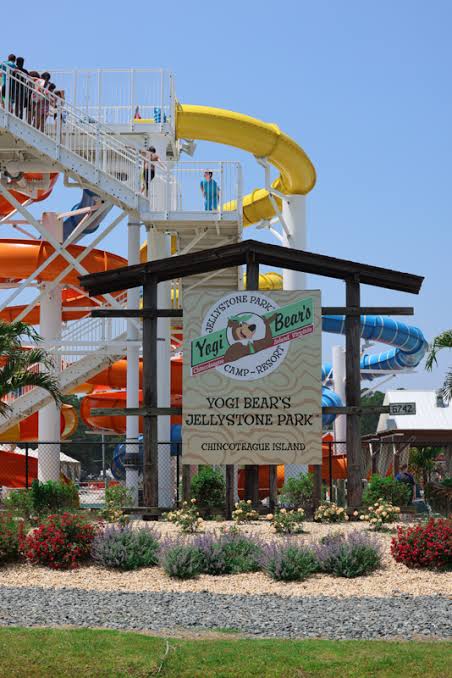
Yogi Bear’s Jellystone Park Chincoteague Island is aimed heavily at families and offers one of the widest ranges of camping styles on the island.
Depending on availability, visitors can choose among:
Traditional tent sites
RV sites
Seasonal RV sites
Safari glamping tents
Rental RVs
Cabins
Island bungalows
This is probably the most obvious choice for families who want campground activities in addition to exploring Chincoteague.
Family-focused amenities have included:
Playground
Jump pad
Dog park
Fishing pier
Theme weekends
Organized activities
Maui Jack’s Waterpark is also located nearby, which can make this area particularly attractive for families traveling with children.
4. Tall Pines / Chesapeake Bay KOA Holiday
Tall Pines / Chesapeake Bay KOA Holiday is located in Temperanceville, a short drive from Chincoteague rather than directly on the island.
Its location along Pocomoke Sound provides a completely different setting, with tall pine trees and Chesapeake Bay-side waterfront scenery.
Camping choices include:
Full-hookup RV sites
Big-rig-friendly sites
Tent camping
Cabins
Cottages
Safari tents
This can be a good option for visitors who don’t mind staying off Chincoteague and want a larger campground with a wooded Eastern Shore atmosphere.
Amenities include:
Swimming pool
Planned activities
Waterfront setting
Large RV sites
Pavilion
Family recreation
Can You Camp on Assateague Island Near Chincoteague?
This causes a lot of confusion.
The Virginia district of Assateague Island does not allow camping or overnight parking. The Chincoteague National Wildlife Refuge specifically prohibits camping.
Assateague Island National Seashore does have campgrounds and backcountry camping opportunities, but those are located in the Maryland district of Assateague, not the Virginia side accessed from Chincoteague.
So if your vacation is centered around Chincoteague, the easiest option is generally to stay at a private campground on or near Chincoteague and drive to the refuge and beach during the day.
Can You Tent Camp in Chincoteague?
Yes, but not every campground accepts traditional tents.
Jellystone Park and Tall Pines / Chesapeake Bay KOA are among the options visitors should investigate for traditional tent camping. Some other properties are increasingly geared toward RVs, cottages, and glamping.
Always check the current site types before making a reservation, especially if you are arriving with only a tent.
What About Glamping?
Glamping has become increasingly popular around Chincoteague.
Visitors who love the outdoor atmosphere but aren’t excited about sleeping on the ground can choose safari tents, cabins, cottages, and rental RVs.
Chincoteague Bay RV Resort offers upscale safari tents with air conditioning and private bathrooms, while Jellystone offers safari tents and several cabin-style accommodations.
This can be a great compromise for couples and families who want a campground atmosphere without a completely traditional camping experience.
Camping With an RV
Chincoteague is particularly well suited to RV vacations.
Tom’s Cove, Chincoteague Bay RV Resort, Jellystone Park, and Tall Pines / Chesapeake Bay KOA all cater to RV travelers in different ways.
Before booking, compare:
Full hookups vs. water and electric only
Maximum RV length
Waterfront availability
30-amp vs. 50-amp service
Sewer hookups
Campground road width
Golf cart policies
Pet policies
Which Chincoteague Campground Is Best for Families?
Families who want lots of campground activities may prefer Jellystone Park or Chincoteague Bay RV Resort.
Families who primarily want the campground to serve as a base for fishing, beach trips, wildlife viewing, and boating may prefer Tom’s Cove.
Tall Pines / Chesapeake Bay KOA can also work well for families who don’t mind staying a short drive away from Chincoteague.
For more ideas once you arrive, see our Chincoteague Family Vacation Guide.
Camping During Pony Swim Week
If you’re planning to camp during Pony Swim Week, reserve as early as possible.
This is the busiest period of the summer, and popular campground sites can fill well in advance. Some campgrounds also require longer minimum stays during Pony Penning Week.
For planning information, read our Chincoteague Pony Swim Explained guide.
Don’t Forget the Bugs
Chincoteague’s marshes are beautiful, but mosquitoes and biting insects are part of the coastal environment, particularly during warm, humid weather.
Campers should bring:
Good insect repellent
Screened tents or shelters
Long sleeves for evenings
Citronella or other campsite insect-control products where permitted
Conditions can change significantly with wind, temperature, and recent rainfall.
What to Do During a Chincoteague Camping Trip
One of the advantages of camping here is how easily you can combine outdoor activities.
A typical camping vacation might include:
Camping puts you close to nature, but some of Chincoteague’s most interesting wildlife habitat is easiest to experience from the water.
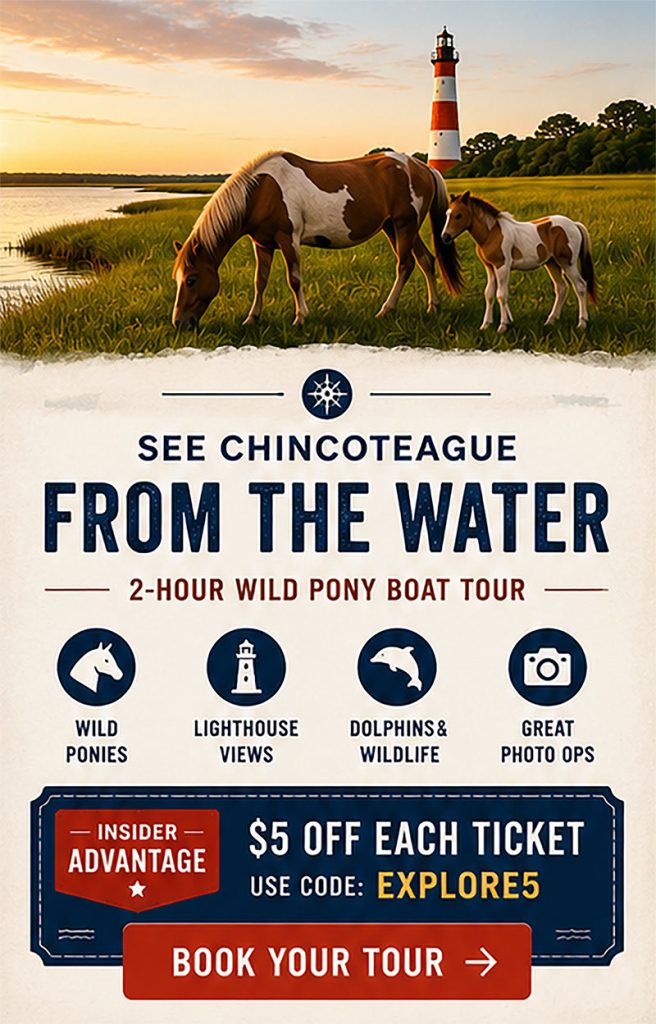
A narrated trip with Barnacle Bill’s Wild Pony Boat Tour explores the waterways around Chincoteague and Assateague while looking for wild ponies, bald eagles, dolphins in season, and other wildlife.
It’s an easy activity to combine with camping because you can spend part of the day exploring Assateague by land and then see an entirely different side of the islands from the water.
Best Time of Year for Camping in Chincoteague
Late spring through early fall is the primary camping season.
Summer offers the warmest beach weather but also the largest crowds and most insects. May, June, September, and early October can be particularly enjoyable for visitors who want comfortable temperatures and somewhat lighter crowds.
For a detailed seasonal breakdown, see our Chincoteague Weather by Month and Best Time to Visit Chincoteague guides.
Frequently Asked Questions About Camping in Chincoteague
Can you camp directly on Assateague Beach in Virginia?
No. Overnight camping is not permitted in the Virginia district of Assateague Island or within Chincoteague National Wildlife Refuge.
Are there waterfront campgrounds in Chincoteague?
Yes. Tom’s Cove Park and Chincoteague Bay RV Resort both offer waterfront camping opportunities on Chincoteague Island.
Can you tent camp in Chincoteague?
Yes, although tent availability varies by campground. Check each campground’s current site options before booking.
Are there campgrounds with cabins or glamping tents?
Yes. Several area campgrounds offer alternatives such as safari tents, cottages, cabins, bungalows, and rental RVs.
Are Chincoteague campgrounds good for children?
Yes. Several campgrounds include pools, playgrounds, organized activities, fishing piers, and other family-oriented amenities.
How early should I reserve a campsite?
For summer weekends and especially Pony Swim Week, book as early as possible. Waterfront sites and popular RV locations often fill first.