

Few animals have become as closely connected with a place as Misty of Chincoteague.
For generations of children, Marguerite Henry’s beloved 1947 book Misty of Chincoteague was their introduction to Chincoteague Island, Assateague Island, the wild ponies and the annual Pony Swim.
But Misty wasn’t simply a fictional character.
Misty was a real Chincoteague pony.
Her true story is slightly different from the version generations of readers grew up with, and in many ways it’s even more interesting.
From her birth at the historic Beebe Ranch to her years traveling with author Marguerite Henry, her return to Chincoteague, the birth of her famous foal Stormy and the generations of descendants that followed, Misty’s life helped transform a small Virginia island and its ponies into something known around the world.
Was Misty of Chincoteague a Real Pony?
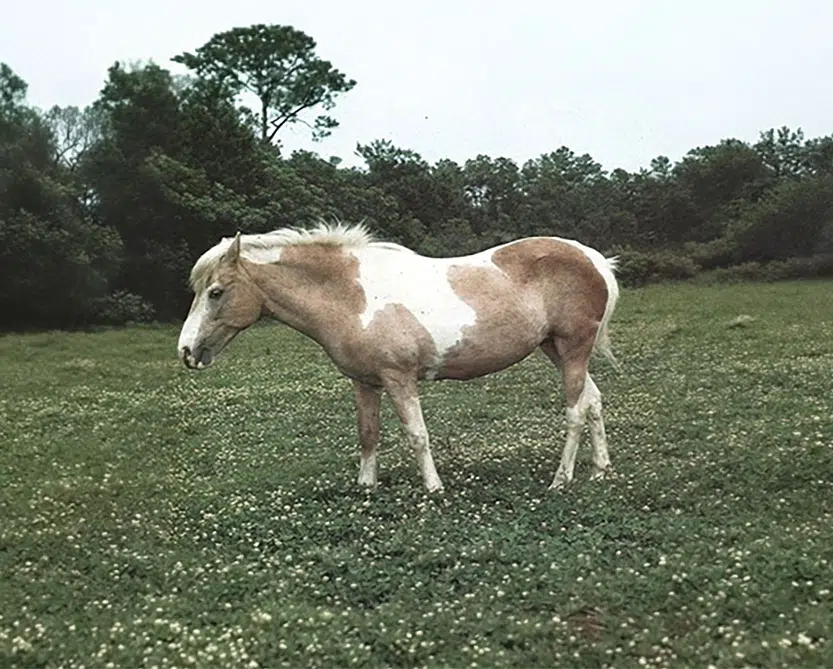
Yes. Misty of Chincoteague was a real pony.
She was a palomino pinto born on July 20, 1946, at the Beebe Ranch on Chincoteague Island.
Her sire was a stallion named Pied Piper, and her dam was a mare named Phantom.
Misty became especially recognizable because of her striking markings, including a large white patch on her side that was often said to resemble a map of the United States.
Those markings, combined with Misty’s gentle personality and the story that would soon be written about her, helped make her one of the most recognizable ponies in American history.
The Real Misty Was Not Born Wild on Assateague
This is one of the biggest differences between the book and the true story.
In Misty of Chincoteague, Misty is portrayed as the foal of Phantom, a wild mare captured during the annual Pony Penning.
In real life, Misty was born at the Beebe Ranch on Chincoteague Island rather than in the wild on Assateague.
Her parents were also ponies associated with the Beebe family’s herd.
Marguerite Henry used real people, real ponies, real places and the very real tradition of Pony Penning as the foundation for her story, but she shaped those elements into a children’s novel.
That distinction is important because visitors sometimes assume every event in Misty of Chincoteague happened exactly as described.
The book is best understood as a story inspired by real Chincoteague history rather than a strict biography of the pony.
How Marguerite Henry Discovered Misty
Children’s author Marguerite Henry traveled to Chincoteague in 1946 while looking for material for a new book.
She arrived during Pony Penning season, when the island’s pony traditions were already attracting visitors.
While on Chincoteague, Henry encountered the Beebe family and a young palomino pinto foal named Misty.
She immediately saw something special.
Henry eventually purchased Misty and took her home to Illinois.
The following year, in 1947, Misty of Chincoteague was published.
The book would forever change the way the rest of the country viewed Chincoteague.
Who Were Paul and Maureen Beebe?
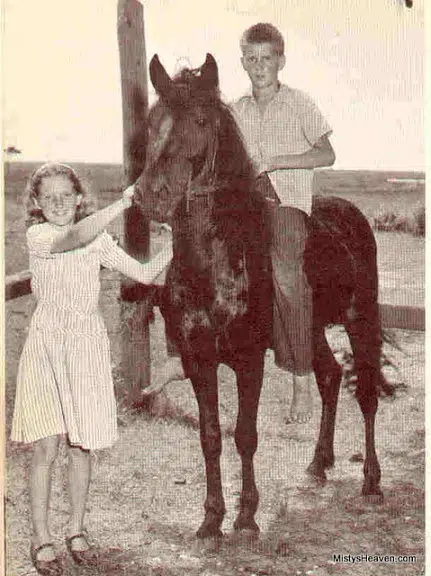 Paul and Maureen Beebe were real members of the Beebe family and became central characters in Marguerite Henry’s story.
They lived with their grandparents, Clarence and Ida Beebe, at the family’s ranch on Chincoteague.
In the novel, Paul and Maureen dream of owning the wild mare Phantom and eventually raise her foal, Misty.
The details were fictionalized, but the Beebe family, ranch and ponies were very real.
That blending of fact and fiction is a major reason the story feels so connected to Chincoteague even decades after it was written.
What Is Misty of Chincoteague About?
Marguerite Henry’s novel follows Paul and Maureen Beebe as they become fascinated with a mysterious wild mare named Phantom.
During the annual Pony Penning, Phantom and her foal Misty are captured with the herd.
The children eventually achieve their dream of owning the ponies, but the story becomes about much more than simply possessing a wild horse.
It explores freedom, responsibility, family and the special relationship between the people of Chincoteague and the ponies of Assateague Island.
For countless readers, the book became their first introduction to the Chincoteague Pony Swim.
Misty Helped Make Chincoteague Famous
Pony Penning existed long before Misty.
But the publication of Misty of Chincoteague brought the story of the island’s ponies to a national and eventually international audience.
Readers wanted to see the place described in the book.
They wanted to see Assateague.
They wanted to watch the ponies swim.
And they wanted to visit Chincoteague.
The book became deeply connected with the identity of the island and helped turn the Chincoteague ponies into one of America’s best-known wild horse herds.
Today, visitors still arrive because they first encountered Chincoteague through Misty’s story as children.
Misty’s Life With Marguerite Henry
After Henry purchased Misty, the pony went to live at the author’s farm in Illinois.
Misty wasn’t simply a pet living quietly in a pasture.
She became part of the extraordinary popularity surrounding the book.
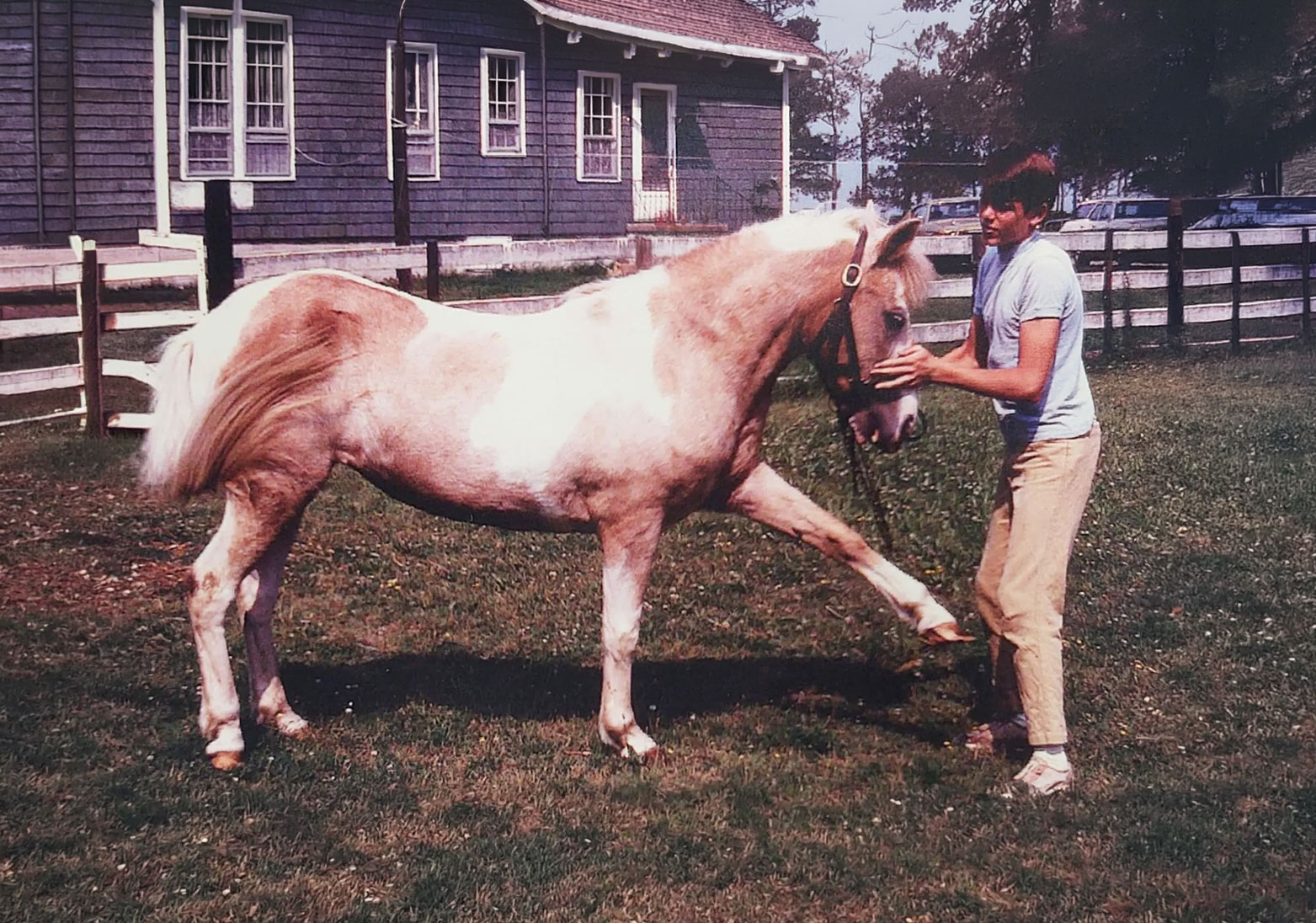
Henry took Misty to appearances around the country, where children who had read the story could actually meet the pony they knew from the pages.
Misty appeared at events, schools, libraries and other public gatherings and became something rare: a real animal who was also a famous literary character.
For children who loved the book, meeting Misty must have felt like watching a storybook character step off the page.
Misty Returned Home to Chincoteague
About a decade after Misty of Chincoteague was published, Misty returned to Chincoteague and the Beebe Ranch.
There, the next chapter of her story began.
Misty became a broodmare and eventually produced three foals:
- Phantom Wings, born in 1960
- Wisp O’ Mist, born in 1961
- Stormy, born in 1962
All three were sired by a stallion named Wings.
Misty’s offspring extended her story beyond the original book and eventually created a family line followed by Chincoteague pony enthusiasts for generations.
Stormy, Misty’s Most Famous Foal
Of Misty’s three foals, Stormy became the most famous.
Her birth came during one of the most dramatic events in Chincoteague history.
In March 1962, the devastating Ash Wednesday Storm struck the barrier islands and Eastern Shore.
The storm caused extensive flooding and destroyed property throughout the area. Many animals were lost.
Misty was heavily pregnant at the time.
During the storm, she was sheltered inside the Beebe family’s home, famously spending part of the disaster in the kitchen.
Afterward, Misty was taken to veterinary care, and on March 11, 1962, she gave birth to Stormy.
The foal became a symbol of survival after the devastating storm.
The event inspired Marguerite Henry to write another book, Stormy, Misty’s Foal.
Did Misty Have Descendants?
Yes, and this is another fascinating part of her legacy.
Misty’s bloodline continued through later generations of Chincoteague ponies.
Her descendants became highly recognizable among enthusiasts who study and document Chincoteague pony pedigrees.
Modern pedigree databases still identify ponies belonging to the Misty family line, and living descendants remain part of the larger Chincoteague pony story.
This has created an entire community of people interested not simply in Misty herself, but in tracing the generations that came after her.
One of the ponies carrying Misty’s famous bloodline into later generations is Beach Boy, a documented descendant of Misty of Chincoteague. His connection to Misty is a reminder that her legacy extends far beyond the beloved 1947 book. Generations after Misty became Chincoteague’s most famous pony, her family line continues through descendants like Beach Boy, giving pony enthusiasts a living connection to the pony whose story helped introduce Chincoteague and its remarkable ponies to the world.
Was Misty Ever Part of Today’s Wild Chincoteague Herd?
No, not in the way many visitors assume from reading the novel.
The real Misty was born in the Beebe family’s domestic herd on Chincoteague rather than being born as a wild foal on Assateague.
Today’s Virginia herd lives wild on the Virginia side of Assateague Island and is managed by the Chincoteague Volunteer Fire Company.
The modern ponies are descendants of generations of Chincoteague ponies, but visitors should not assume that every current wild pony is directly descended from Misty.
Misty and the Chincoteague Pony Swim
The Chincoteague Pony Swim is one of the most famous traditions connected with Misty’s story.
The annual event began decades before the book was published, but Misty of Chincoteague introduced it to millions of readers.
During Pony Penning, the Virginia herd is rounded up on Assateague Island by the Saltwater Cowboys.
The ponies swim across the Assateague Channel to Chincoteague and later participate in the annual Pony Auction before the remaining herd returns to Assateague.
The event helps manage the size of the herd and raises money for the Chincoteague Volunteer Fire Company.
For many visitors, attending Pony Swim is the fulfillment of a childhood dream that began with reading Misty’s story.
The 1961 Misty Movie
Misty’s popularity eventually reached Hollywood.
In 1961, the story was adapted into the movie Misty.
The film brought images of Chincoteague, Pony Penning and the island’s ponies to an even wider audience.
For people who had already fallen in love with the book, the movie provided another way to experience the story.
More than six decades later, both the book and movie remain part of Chincoteague’s cultural history.
Where Can You See Misty of Chincoteague Today?
Visitors can still encounter Misty’s story in several places around Chincoteague Island.
Museum of Chincoteague Island
The Museum of Chincoteague Island preserves many important pieces of local history, including Misty’s story.
Misty herself is preserved and displayed at the museum, allowing generations of visitors who grew up with the book to finally see the real pony.
Beebe Ranch
The historic Beebe Ranch is the place most closely associated with the real Misty and the family featured in Marguerite Henry’s story.
In 2023, the Museum of Chincoteague Island acquired the property, preserving it as an important part of the island’s history.
For Misty fans, visiting the ranch connects the literary story with the actual landscape where the Beebe family and their ponies lived.
Misty’s Statue
Visitors can also find a statue honoring Misty on Chincoteague Island.
It’s become a favorite photo stop for families who arrive knowing her story.
Why Misty’s Story Still Matters
Misty died in 1972 at the age of 26, but her influence never really disappeared.
New generations continue to discover Marguerite Henry’s book.
Parents who read it as children give it to their children.
Those children grow up wanting to visit Chincoteague.
Some eventually bring their own families.
It’s difficult to measure exactly how much one pony and one children’s book contributed to the fame of Chincoteague Island, but it’s hard to imagine the island’s modern identity without Misty.
She helped connect millions of people with a small barrier-island community they might otherwise never have discovered.
Are the Chincoteague Ponies Really Wild?
Yes. The ponies living on the Virginia portion of Assateague Island are wild and roam freely throughout their habitat.
That means seeing them isn’t like visiting animals in a zoo or pasture.
Their location changes constantly depending on weather, tides, food, insects and the behavior of the individual bands.
If you’re planning a visit, our guide to where to see the wild ponies in Chincoteague explains some of the best options.
Seeing the World That Inspired Misty
You can’t meet the real Misty today the way children once did at one of Marguerite Henry’s appearances.
But you can still experience the landscape that inspired her story.
Assateague remains a place of salt marshes, winding channels, coastal birds and wild ponies moving freely across the island.
Seeing that landscape from the water gives you a perspective that is surprisingly close to the world described in stories about Chincoteague’s ponies.
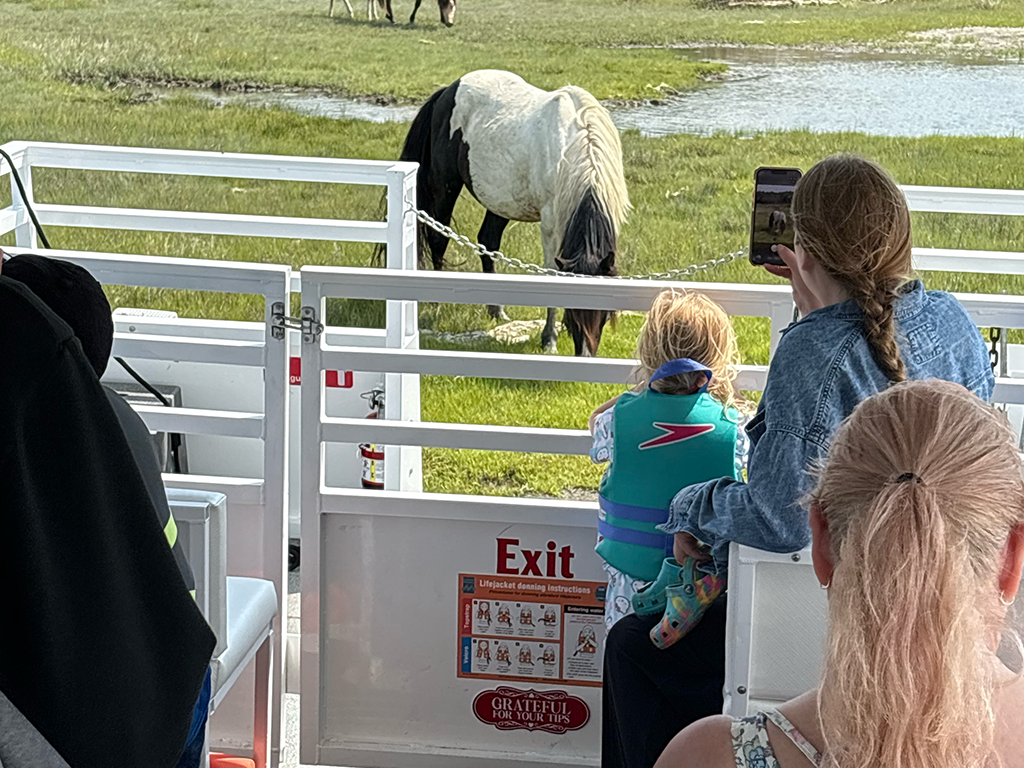
On a Barnacle Bill’s Wild Pony Boat Tour, the ponies are the highlight, but the experience is about much more than simply taking a boat ride searching for ponies.
Our tours are live-narrated and combine the wild ponies with Chincoteague history, Assateague Island, the Saltwater Cowboys, Pony Swim traditions, local wildlife and stories such as Misty’s.
Every trip is unique because the ponies are wild and roam freely. Along the way, you may also encounter bald eagles, coastal birds and dolphins during their seasonal visits.
Guests can also explore our exclusive Barnacle Bill’s picture book featuring hundreds of photographs that help bring the ponies, wildlife and history of Chincoteague and Assateague to life.
Misty’s Lasting Legacy
There have been many famous Chincoteague ponies.
There are stallions people recognize today, family bands followed by photographers and foals whose stories are shared around the country.
But Misty occupies a category of her own.
She wasn’t simply a famous pony.
She became the pony that introduced Chincoteague to the world.
Nearly eight decades after Marguerite Henry published her story, people still arrive on Chincoteague knowing Misty’s name.
They visit the Beebe Ranch.
They photograph her statue.
They visit the museum.
They watch the Pony Swim.
And perhaps most importantly, they look across the marsh toward Assateague hoping to see a band of wild ponies moving through the same landscape that captured Marguerite Henry’s imagination in 1946.
That’s a remarkable legacy for one little palomino pinto pony.
Frequently Asked Questions About Misty of Chincoteague
Was Misty of Chincoteague a real horse?
Yes. Misty was a real palomino pinto Chincoteague pony born at the Beebe Ranch on July 20, 1946.
Was Misty born wild on Assateague Island?
No. This is one of the major differences between the novel and real life. The actual Misty was born at the Beebe Ranch on Chincoteague Island.
Who wrote Misty of Chincoteague?
Children’s author Marguerite Henry wrote Misty of Chincoteague. The book was published in 1947.
Who were Misty’s parents?
Misty’s sire was Pied Piper and her dam was Phantom.
How many foals did Misty have?
Misty had three foals: Phantom Wings, Wisp O’ Mist and Stormy.
Who was Stormy?
Stormy was Misty’s third foal, born in 1962 shortly after the devastating Ash Wednesday Storm. Her story inspired Marguerite Henry’s book Stormy, Misty’s Foal.
Are there still descendants of Misty alive today?
Yes. Misty’s family line continued for generations, and documented descendants of Misty remain part of the broader Chincoteague pony community.
Where can I see Misty on Chincoteague Island?
Misty is preserved and displayed at the Museum of Chincoteague Island. Visitors can also explore the historic Beebe Ranch, now preserved by the museum.
When did Misty die?
Misty died in 1972 at the age of 26.
Did Misty make Chincoteague famous?
Chincoteague and Pony Penning were already established before Misty, but Marguerite Henry’s 1947 book brought the island, the ponies and the annual Pony Swim to a huge national audience and played a major role in their lasting fame.
Can you still see wild Chincoteague ponies today?
Yes. The Virginia herd continues to live wild on Assateague Island. The ponies roam freely, so sightings of any particular pony or band can never be guaranteed.
Planning a Chincoteague trip? Continue exploring our guides to where to see the wild ponies, the Chincoteague Pony Swim, and Riptide, one of Chincoteague’s best-known modern stallions.