

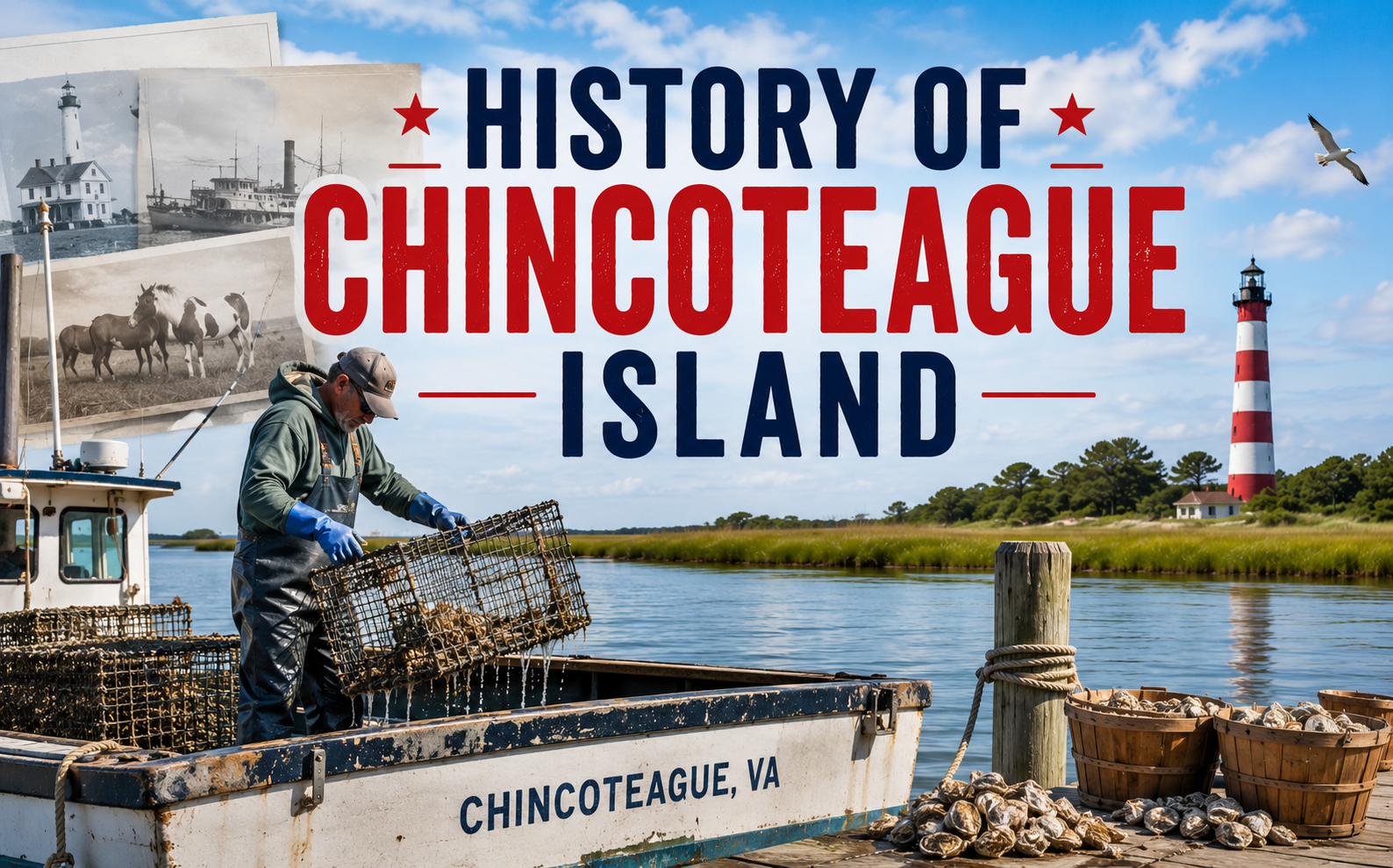
Today, most visitors know Chincoteague for its wild ponies, beautiful beaches, wildlife refuge, and laid-back coastal charm. But the island’s history stretches back hundreds of years and is filled with fascinating stories of Native Americans, shipwreck legends, watermen, seafood industries, storms, and resilient island families.
Understanding Chincoteague’s history helps visitors appreciate that the island is much more than a vacation destination. It is a working waterfront community with deep roots and a unique culture that still survives today.
Quick Answer
Chincoteague Island evolved from a remote fishing and shellfishing community into one of Virginia’s most popular tourist destinations. Its history includes Native American settlements, colonial-era watermen, the oyster industry, commercial fishing, the famous Pony Swim, and the creation of the Chincoteague National Wildlife Refuge.
Before Europeans Arrived
Long before Chincoteague became a town, Native American tribes used the waters surrounding the island for fishing, shellfishing, hunting, and transportation.
The protected bays, marshes, and abundant seafood resources made Virginia’s Eastern Shore an ideal place for seasonal activity.
While permanent settlements were limited on the barrier islands themselves, Native Americans relied heavily on the surrounding waters that continue to support wildlife and fishing today.
The Meaning of Chincoteague
The exact origin of the word “Chincoteague” remains debated.
Many historians believe the name comes from an Algonquian word that has been translated as:
- “Beautiful land across the water”
- “Large stream”
- “Beautiful island”
Regardless of the precise translation, the name reflects the area’s Native American heritage and long connection to the surrounding waterways.
The Early Settlers
European settlers began establishing themselves on Virginia’s Eastern Shore during the 1600s.
Unlike larger colonial cities, Chincoteague remained isolated for much of its early history. The island’s economy revolved around the water.
Residents made their living through:
- Fishing
- Oystering
- Clamming
- Crabbing
- Boat building
- Waterfowl hunting
- Maritime trades
These early watermen laid the foundation for the island culture that still exists today.
The Wild Pony Mystery
No discussion of Chincoteague history would be complete without the wild ponies.
The exact origin of the ponies remains one of the island’s greatest mysteries.
Local legend says they descended from horses that survived a Spanish shipwreck centuries ago. Historians generally believe settlers may have intentionally placed horses on Assateague Island to avoid taxes and fencing requirements on the mainland.
Today, the ponies remain one of the island’s defining symbols.
Learn more: Why Are There Wild Ponies on Assateague Island?
The Watermen Era
For generations, Chincoteague’s economy depended almost entirely on the water.
Watermen harvested oysters, clams, crabs, scallops, and fish from the surrounding bays.
Families often worked together, passing knowledge from one generation to the next.
Many local traditions, stories, and expressions still trace their origins to these watermen communities.
Even today, visitors can see commercial fishing boats, crabbers, and shellfish operations throughout the area.
The Oyster Boom
During the late 1800s and early 1900s, oysters helped fuel tremendous growth throughout Virginia’s Eastern Shore.
Oyster harvesting supported businesses, jobs, and local families while connecting Chincoteague to seafood markets across the East Coast.
The oyster industry became one of the most important economic drivers in the region’s history.
The Pony Swim Begins
One of the most important events in Chincoteague history began in 1925.
The Chincoteague Volunteer Fire Company organized what would become the annual Pony Swim.
Each year, Saltwater Cowboys guide the Virginia herd across the channel from Assateague to Chincoteague.
What began as a practical livestock management event eventually became one of the most famous traditions on the East Coast.
Learn more: Chincoteague Pony Swim Explained
Misty of Chincoteague Changes Everything
In 1947, author Marguerite Henry published Misty of Chincoteague.
The novel became a bestseller and introduced millions of readers to the island and its famous ponies.
For many visitors, Misty provided their first introduction to Chincoteague.
The book’s popularity transformed the island from a relatively unknown coastal community into a destination recognized throughout the country.
The Creation of the Wildlife Refuge
A major turning point came with the establishment of the Chincoteague National Wildlife Refuge.
Created in 1943, the refuge protected important migratory bird habitat and helped preserve the natural environment that makes Assateague and Chincoteague unique.
Today, the refuge attracts birdwatchers, photographers, hikers, and wildlife enthusiasts from around the world.
Storms and Resilience
Like many coastal communities, Chincoteague has faced hurricanes, nor’easters, flooding, and severe storms throughout its history.
Island residents learned to adapt to challenging conditions and rebuild when necessary.
That resilience remains an important part of local identity today.
The Rise of Tourism
As roads improved and more people discovered Virginia’s Eastern Shore, tourism gradually became a major part of the local economy.
Visitors began arriving for:
- Wild ponies
- Assateague Beach
- Birdwatching
- Fishing
- Boating
- Family vacations
- Pony Swim Week
Tourism now supports many local businesses while helping preserve the island’s unique character.
Modern Chincoteague
Today’s Chincoteague balances tourism, conservation, and its working-waterfront heritage.
Visitors can still experience many of the traditions that shaped the island:
- Seafood harvesting
- Boat building
- Commercial fishing
- Pony Swim traditions
- Wildlife conservation
- Watermen culture
While the island has grown and changed, many residents remain committed to preserving what makes Chincoteague special.
Experience Chincoteague’s History From the Water
One of the best ways to understand Chincoteague’s history is from the water itself.
The waterways shaped everything from transportation and fishing to the Pony Swim and the growth of local communities.
A narrated trip with Barnacle Bill’s Wild Pony Boat Tour explores many of these historic waterways while sharing stories about the ponies, watermen, Assateague Lighthouse, local folklore, and the events that shaped the islands.
Frequently Asked Questions
How old is Chincoteague?
The area’s history dates back hundreds of years, with European settlement beginning during the colonial era.
What made Chincoteague famous?
The wild ponies, Pony Swim, and the book Misty of Chincoteague played major roles in making the island famous.
What did people do before tourism?
Most residents worked as watermen, fishermen, oystermen, clammers, crabbers, and boat builders.
Why is the Pony Swim important?
The Pony Swim is both a herd management tradition and one of the island’s most important cultural events.
Is Chincoteague still a working waterfront?
Yes. Commercial fishing and seafood harvesting remain important parts of the local economy.