

This article is part of the Explore Chincoteague Visitor Guide, our complete resource for wild ponies, Assateague Beach, wildlife, restaurants, boat tours, local history, weather, family activities, and trip planning.
Quick Answer
The Chincoteague wild ponies live on Assateague Island. Visitors can look for them from designated viewing areas inside Chincoteague National Wildlife Refuge, from refuge trails, and from narrated boat tours that explore the marshes and waterways around Assateague.
For a complete overview of Chincoteague attractions, trip planning tips, wild pony viewing, beaches, wildlife, restaurants, and local history, see our Ultimate Chincoteague Guide.
Do the Ponies Live on Chincoteague?
Although they are commonly called Chincoteague ponies, the wild ponies live on Assateague Island. Chincoteague is the town where visitors stay, dine, shop, and book tours. Assateague is the protected barrier island where the ponies graze and move through marshes, woods, and refuge lands.
Best Land-Based Pony Viewing
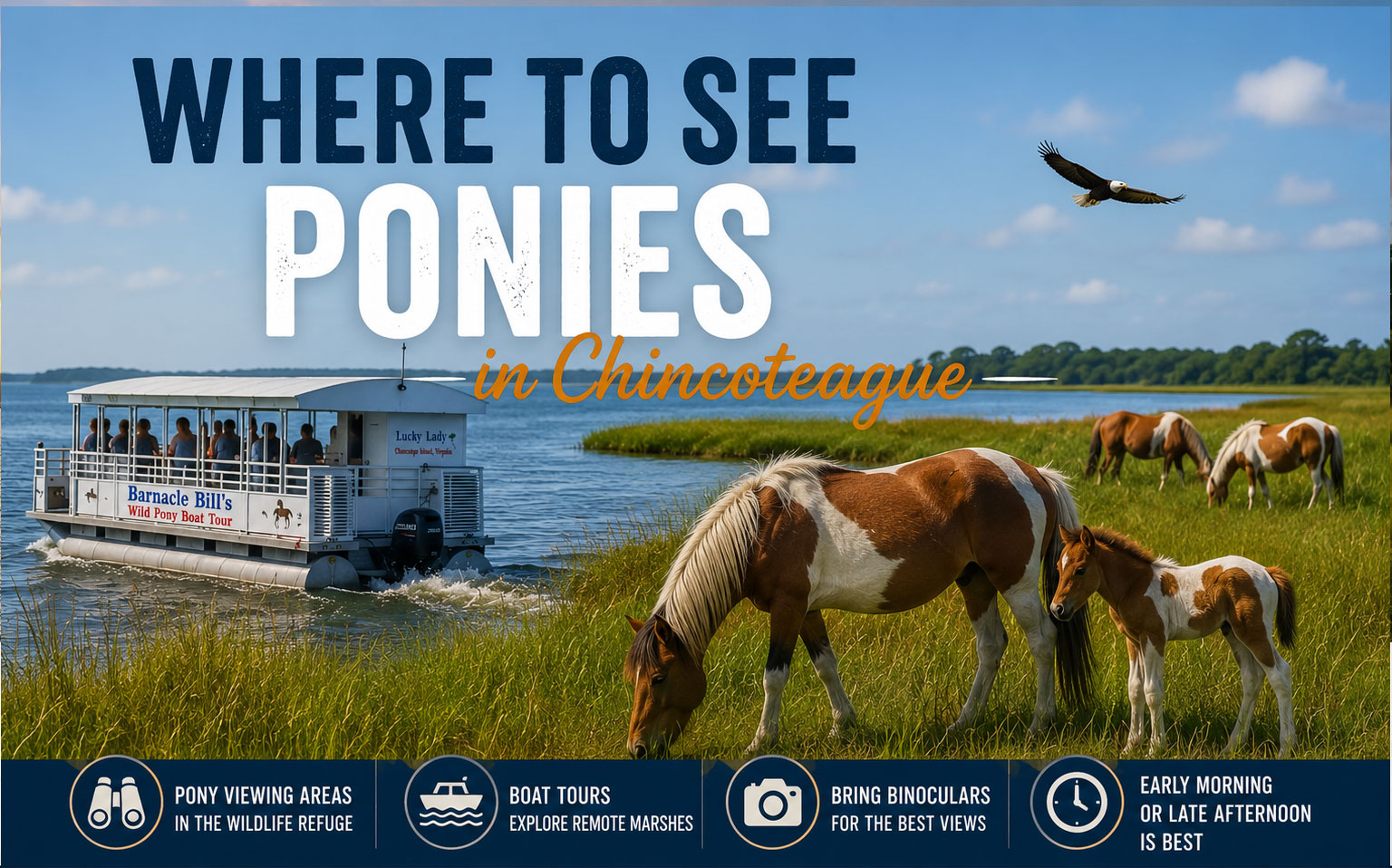
The most common land-based option is visiting the refuge and checking designated pony viewing areas. Bring binoculars because the ponies may be far away. Sightings from land can be excellent on some days and limited on others.
Why Boat Tours Help
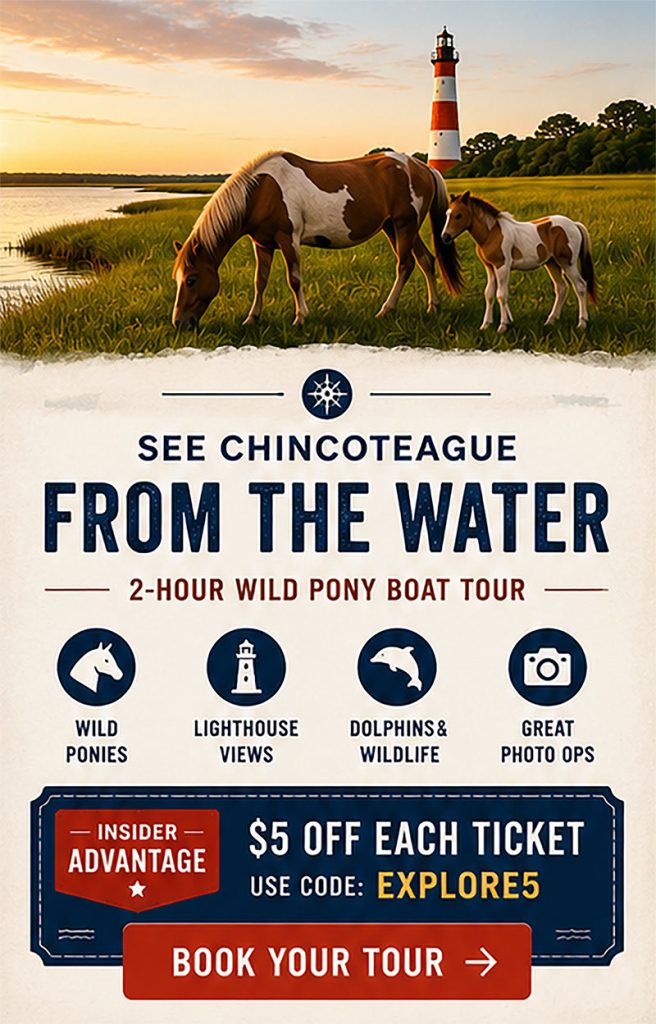
Many pony bands spend time in marsh areas that are difficult or impossible to see from the road. A boat tour can provide a better view of the remote shoreline and marshes where the ponies often feed. Barnacle Bill’s Wild Pony Boat Tour also explains the history of the herds, the Pony Swim, and the relationship between Chincoteague and Assateague.
Best Time of Day to Look
Morning and late afternoon are often good times for wildlife viewing. Cooler temperatures, softer light, and quieter conditions may help. Midday can still produce sightings, but wildlife can be less active during hot weather.
Pony Viewing Tips
- Bring binoculars or a zoom lens.
- Visit more than one viewing area.
- Take a boat tour early in your trip.
- Do not approach, feed, or touch the ponies.
- Be patient because the ponies move naturally through a large habitat.
Can You Touch the Ponies?
No. The ponies are wild animals. Visitors should never touch, feed, chase, or approach them. Respecting distance protects both people and ponies.
Plan the Best Pony Day
For the best chance of a memorable pony experience, spend time in the refuge, bring binoculars, and take a narrated boat tour. That combination gives you both the land-based and water-based perspective.
Continue Exploring Chincoteague
This article is part of our comprehensive Explore Chincoteague resource center, covering wild ponies, beaches, wildlife, boat tours, restaurants, local history, family activities, weather, and trip planning.